


Download VEVOR App 

Exclusive 5,00€ off for your first three orders on the App.
Scan the QR code to download


+12
More


Features & Details
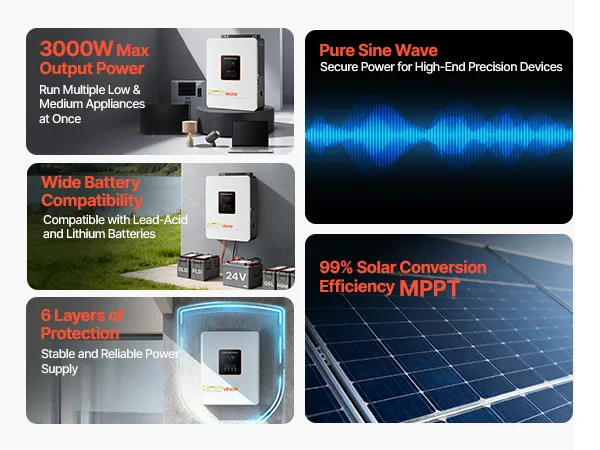
- 2-in-1 Hybrid Solar Inverter: Seamlessly integrates the inverter and controller in one unit. Delivers 3000W, 230V AC single-phase pure sine wave output, making it ideal for small homes and off-grid solar systems. For appliances requiring other voltages, a transformer is required (not included)
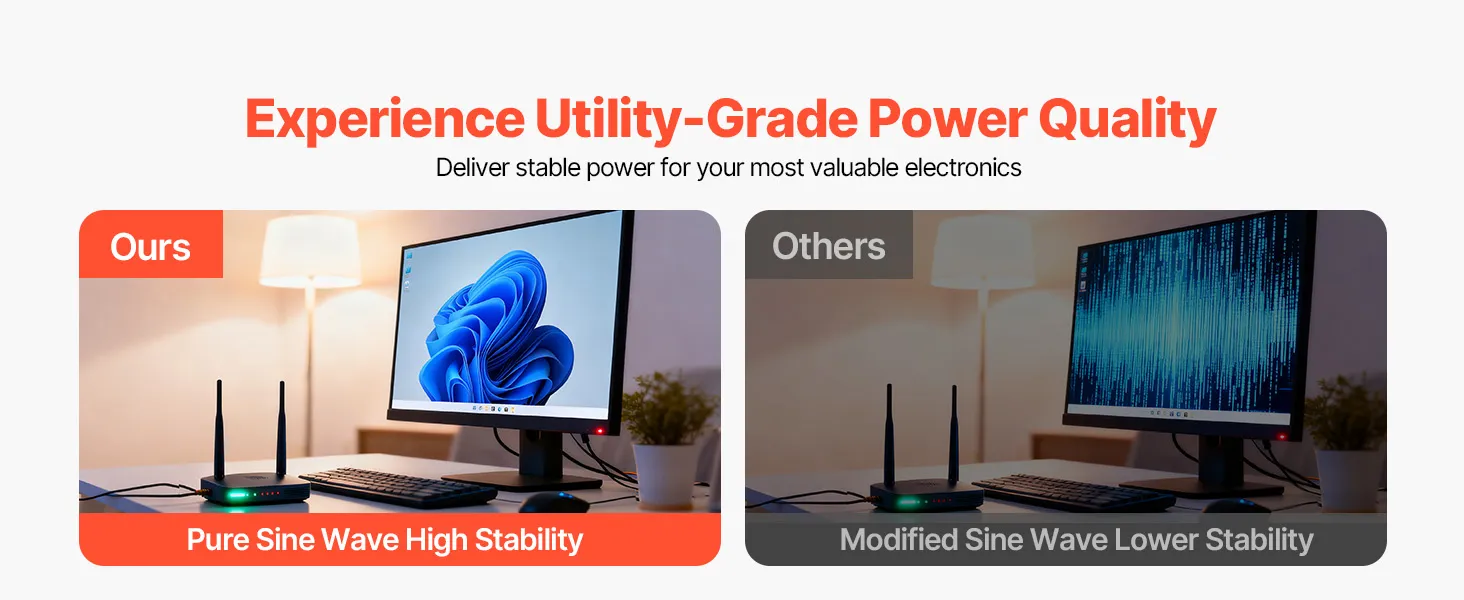
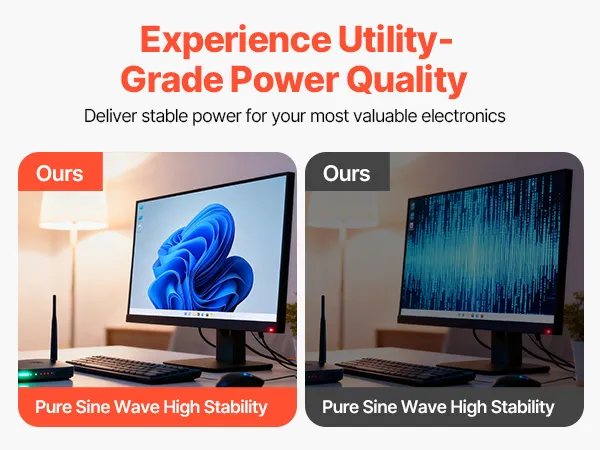
- Pure Sine Wave Output: Enjoy utility-quality electricity for your voltage-sensitive precision electronics. With a pure sine wave output, our solar power inverter ensures stable and secure operation for various home appliances, such as computers and TVs
- 99% Conversion Efficiency: Equipped with an advanced MPPT solar charge controller, this hybrid inverter charger captures and converts more solar energy into usable power, significantly increasing your daily energy yield
- Wide Battery Compatibility: Designed for 24V battery systems, this hybrid solar power inverter supports lithium, lead-acid, and even custom battery types. Providing flexibility for your preferred storage solution
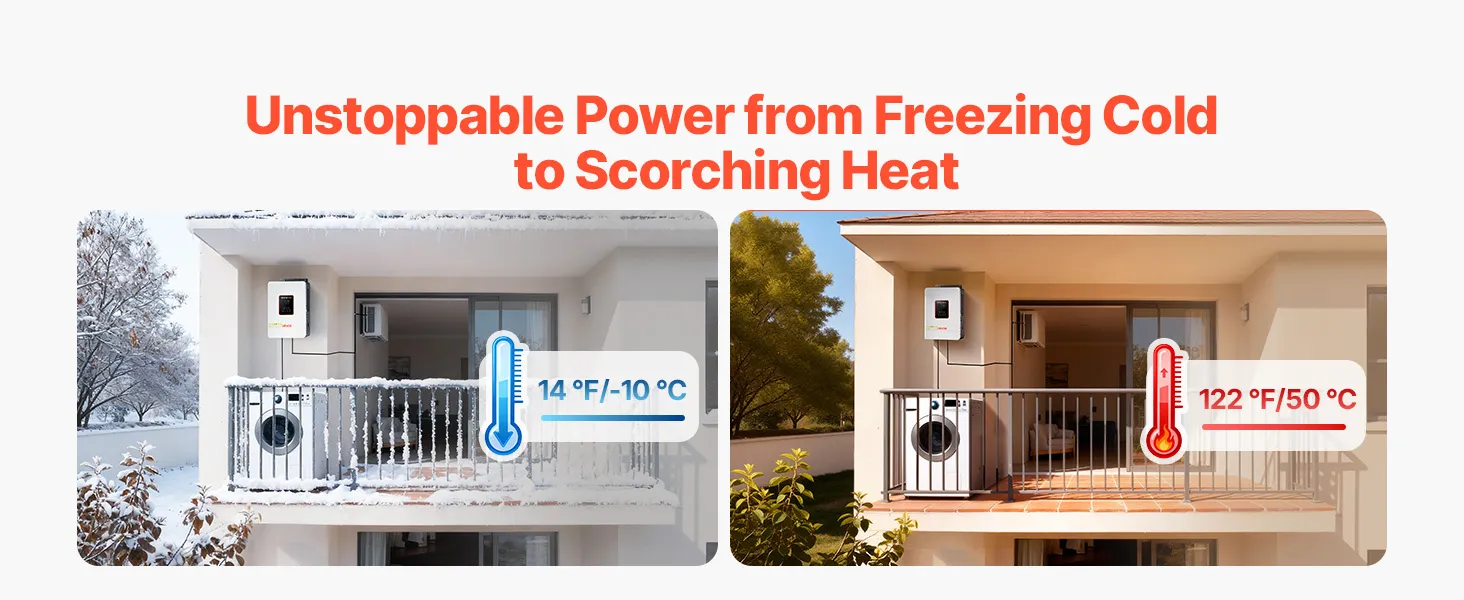
- Comprehensive Protections: Includes over-temperature, over-current, over-voltage, under-voltage, short circuit, and overload protection. This off grid hybrid solar inverter ensures secure operation for your circuits and power supply
Frequently Bought Together
Reviews 4.8
All reviews are from verified purchases
Average rating based on 4 reviews
Reviews 4.8
All reviews are from verified purchases
See all 4 reviews
About this item
Product specification
- Item Model Number
- GD3024JMH
- Output Voltage/Frequency
- 230V AC, 50/60Hz
- Inverter Output Power
- 3000W
- Output Waveform
- Pure Sine Wave
- Compatible Battery Voltage
- 24V DC
- Compatible Battery Types
- Lead-Acid/Lithium Battery
- MPPT Charge Controller
- 24V, 80A
- Peak Efficiency
- 93%
- Noise Level
- <50 dB
- Operating Temperature
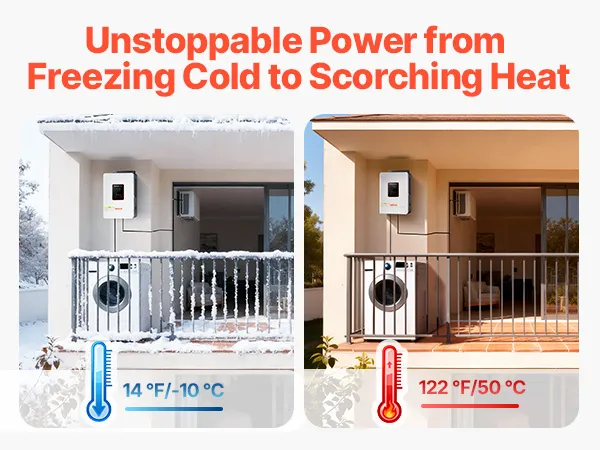
- 14 ℉ to 122 ℉/–10 ℃ to 50 ℃
- Operating Humidity
- 20% to 95% RH (non-condensing)
- Color
- White
- Material
- Powder-Coated Sheet Metal
Description
3000W Hybrid Solar Inverter & Controller
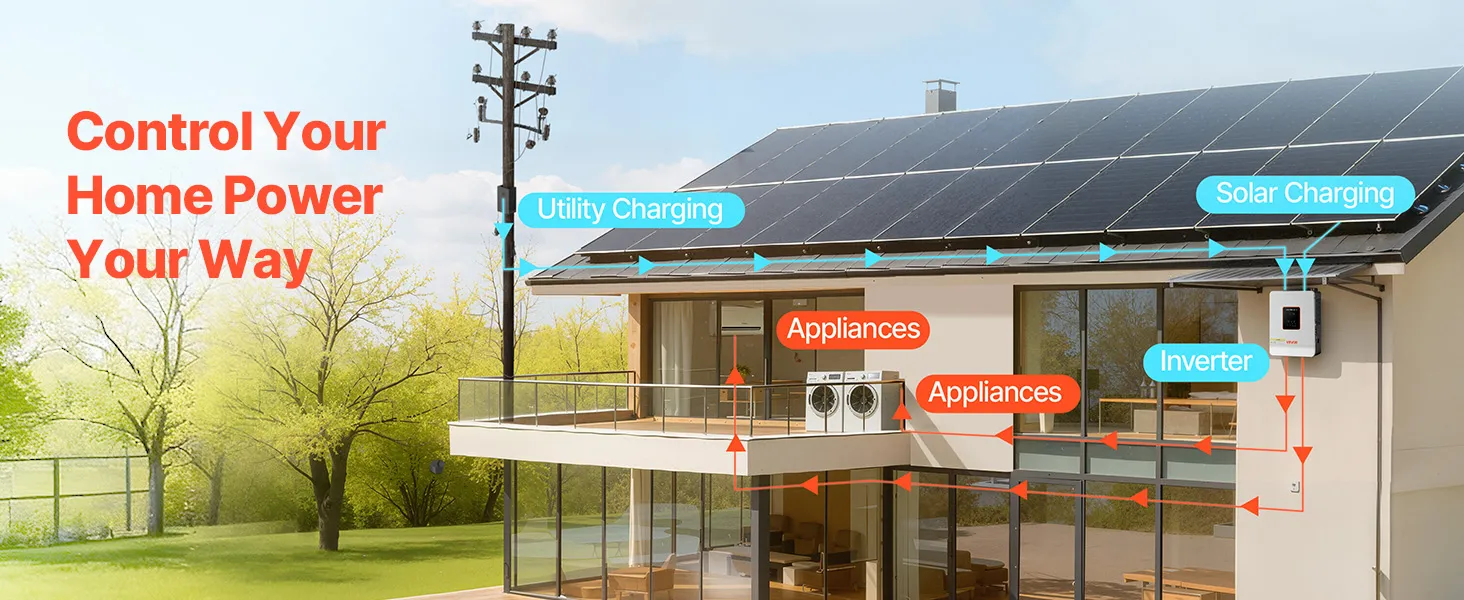
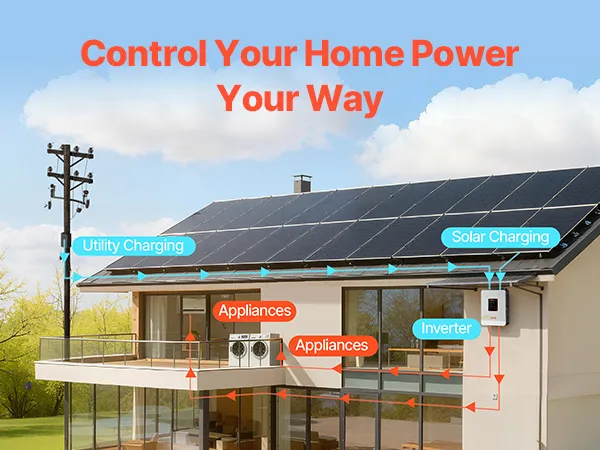
Combines the inverter and controller in one unit. Delivering a powerful 3000W pure sine wave output, it ensures stable electricity for your appliances. With advanced MPPT charging technology, it achieves up to 99% conversion efficiency. Compatible with lithium, lead-acid, and LiFePO4 batteries.

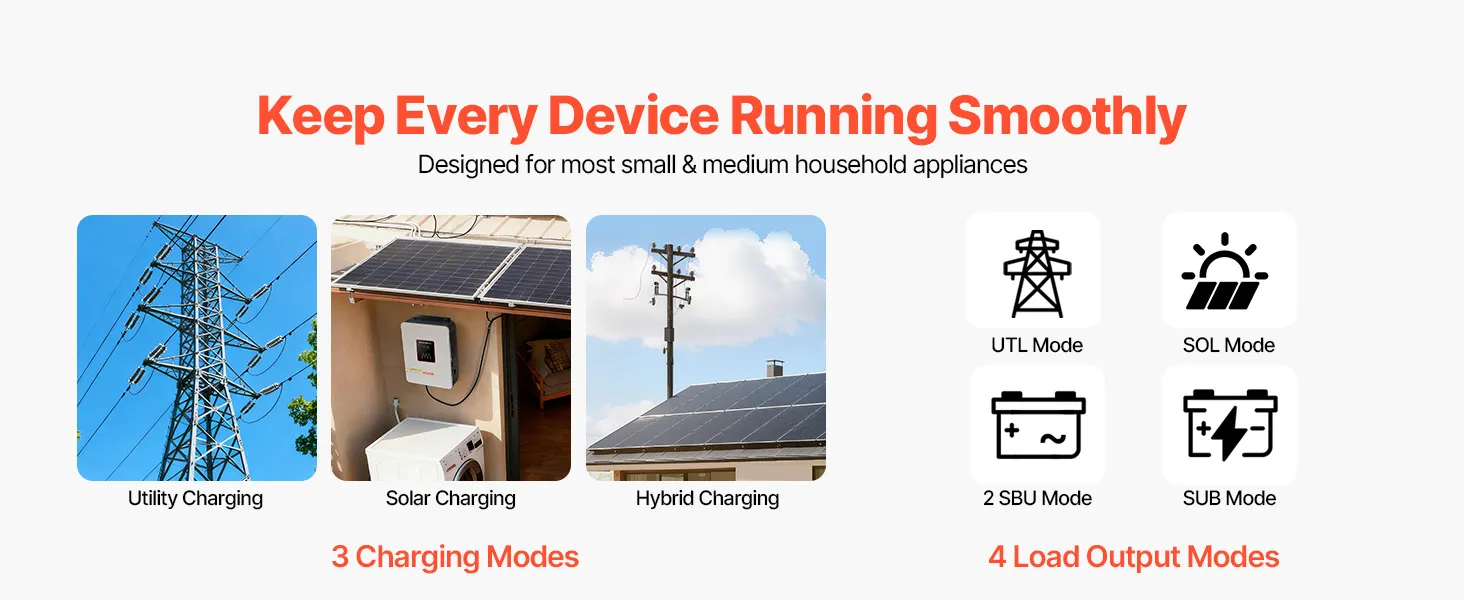

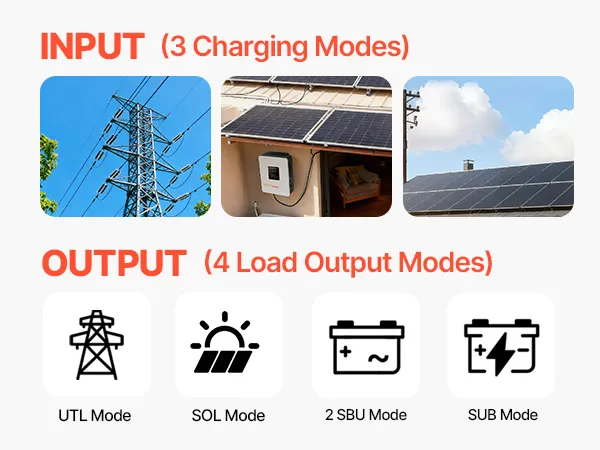
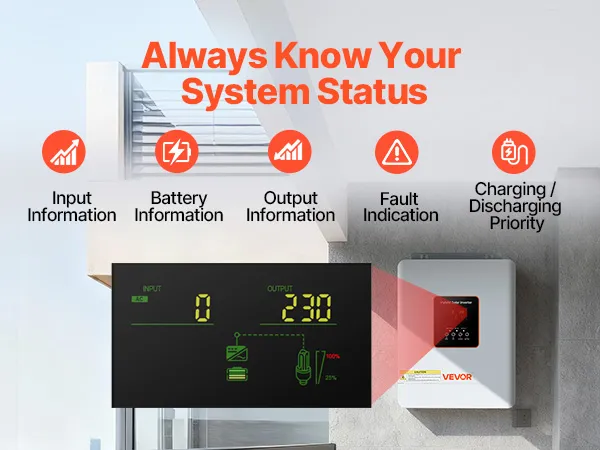
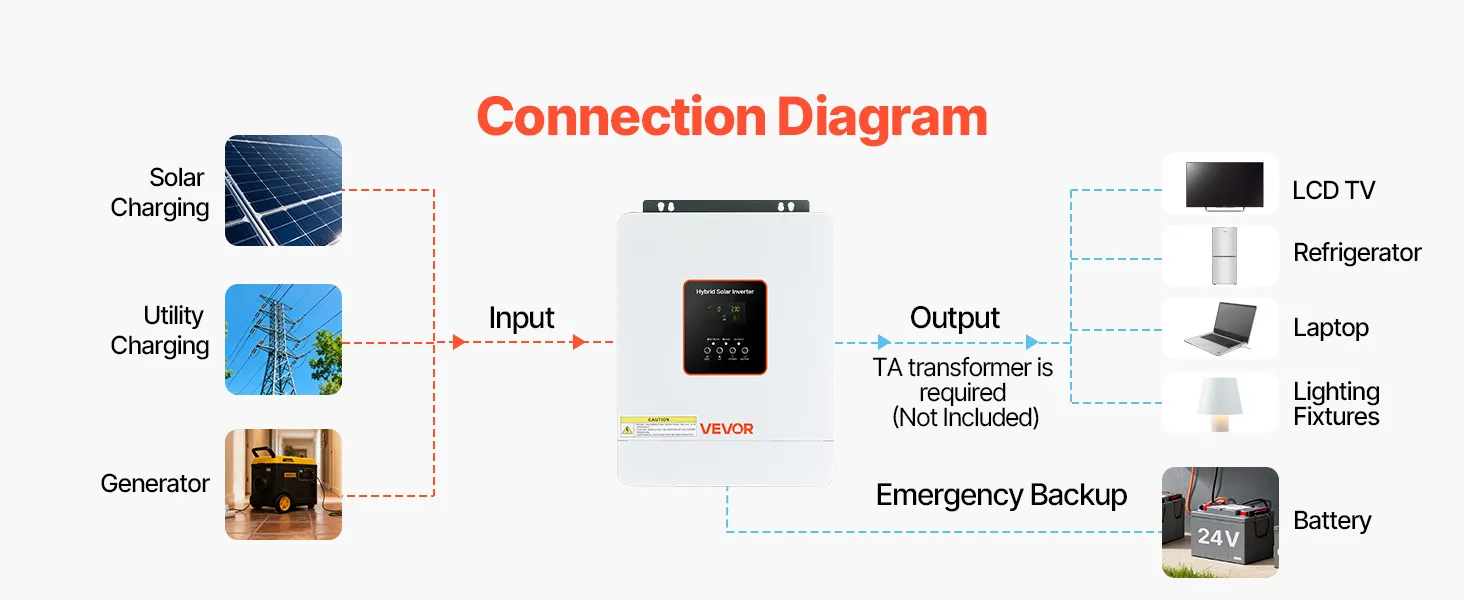

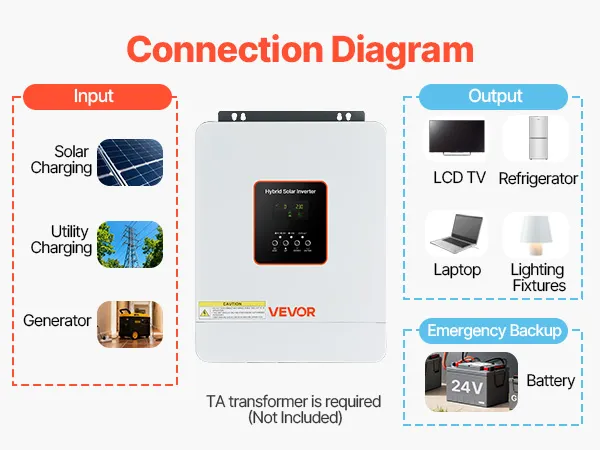

Key Features
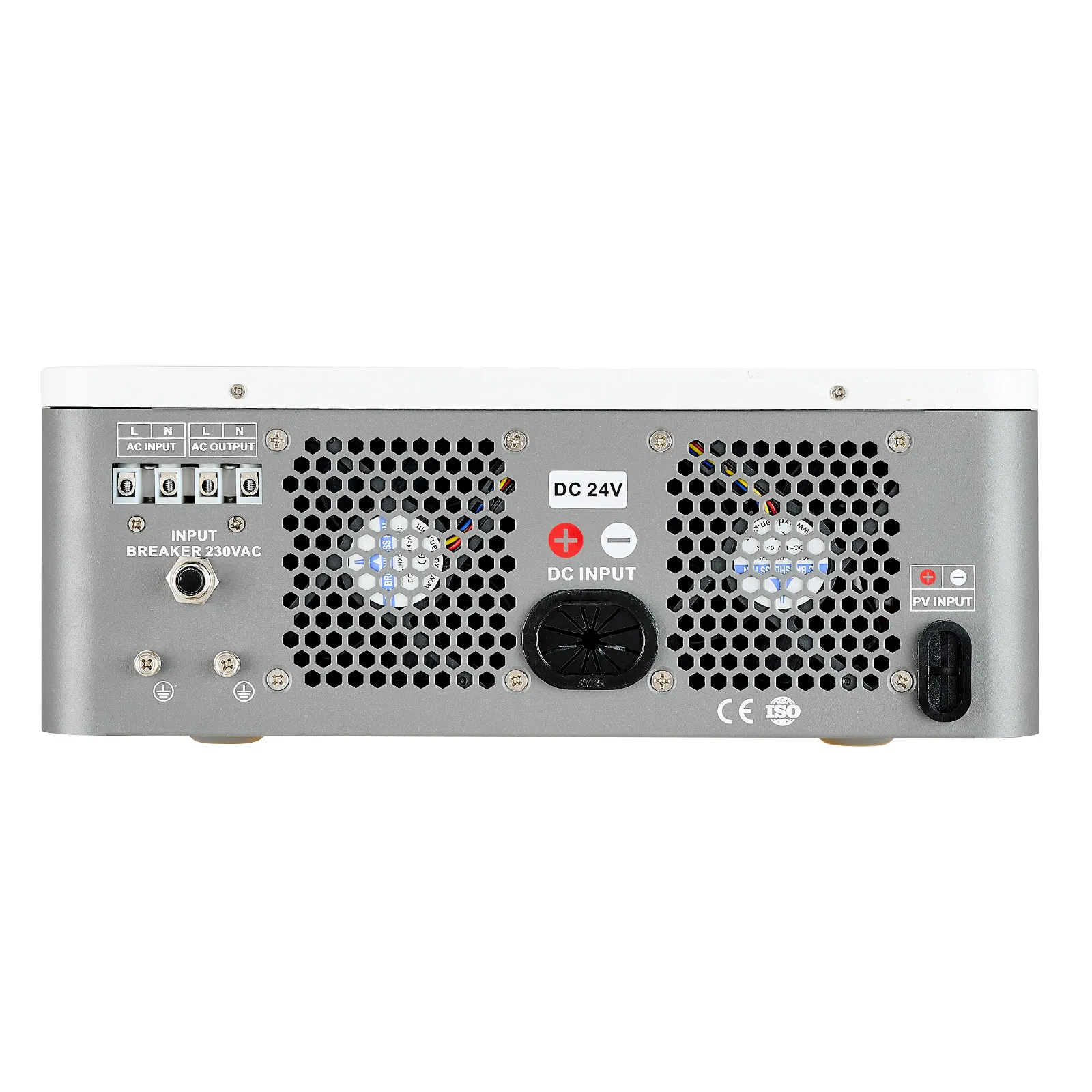
Short Circuit Protection
Our hybrid solar inverter features built-in short-circuit protection. When an unexpected short occurs at the output, the system instantly cuts off the current flow, preventing damage to critical power components and avoiding costly repairs or replacements.
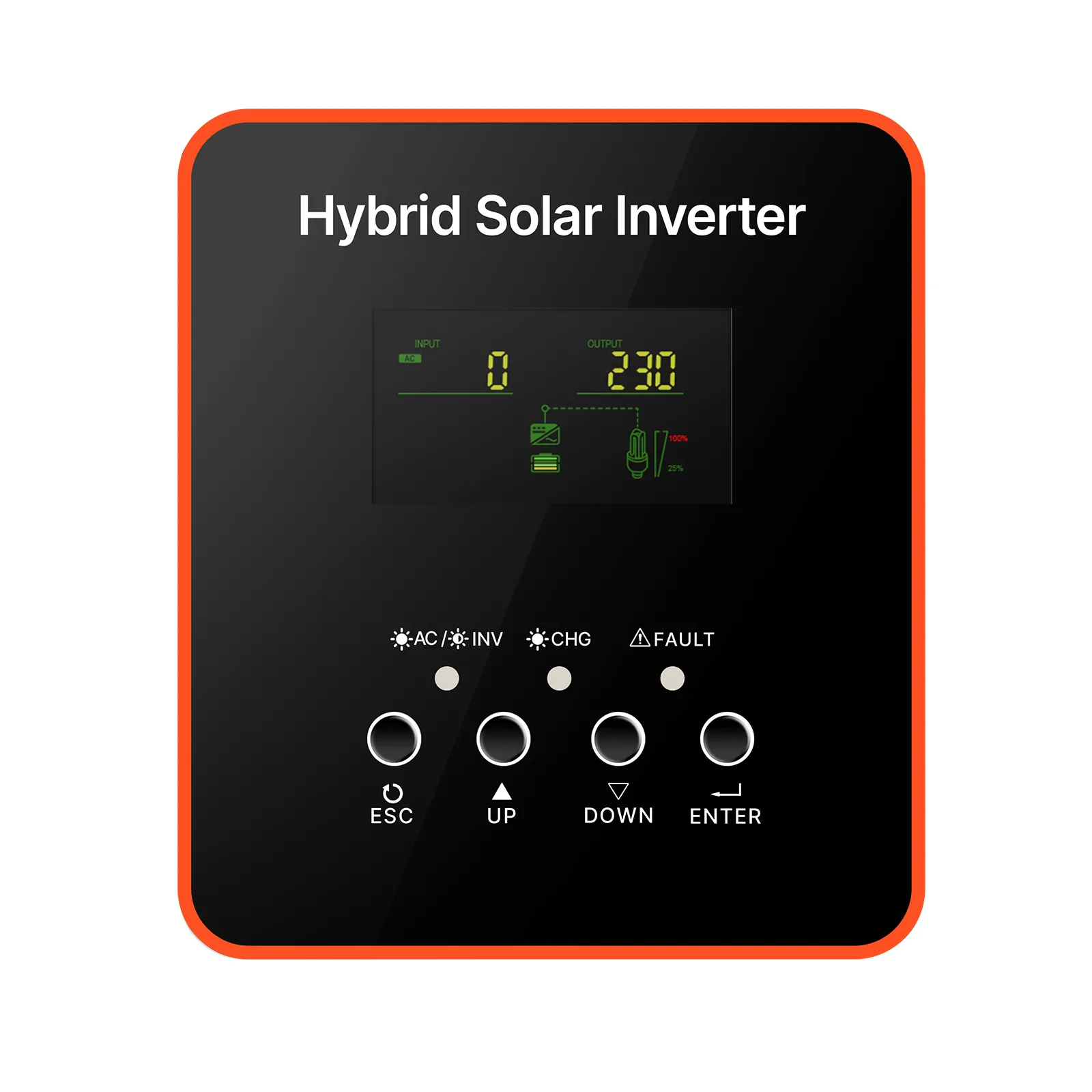
Overload Protection
Equipped with overload protection, the solar power inverter automatically shuts down when the total connected load exceeds its rated capacity. This avoids internal damage and minimizes electrical fire risks caused by excessive power draw.
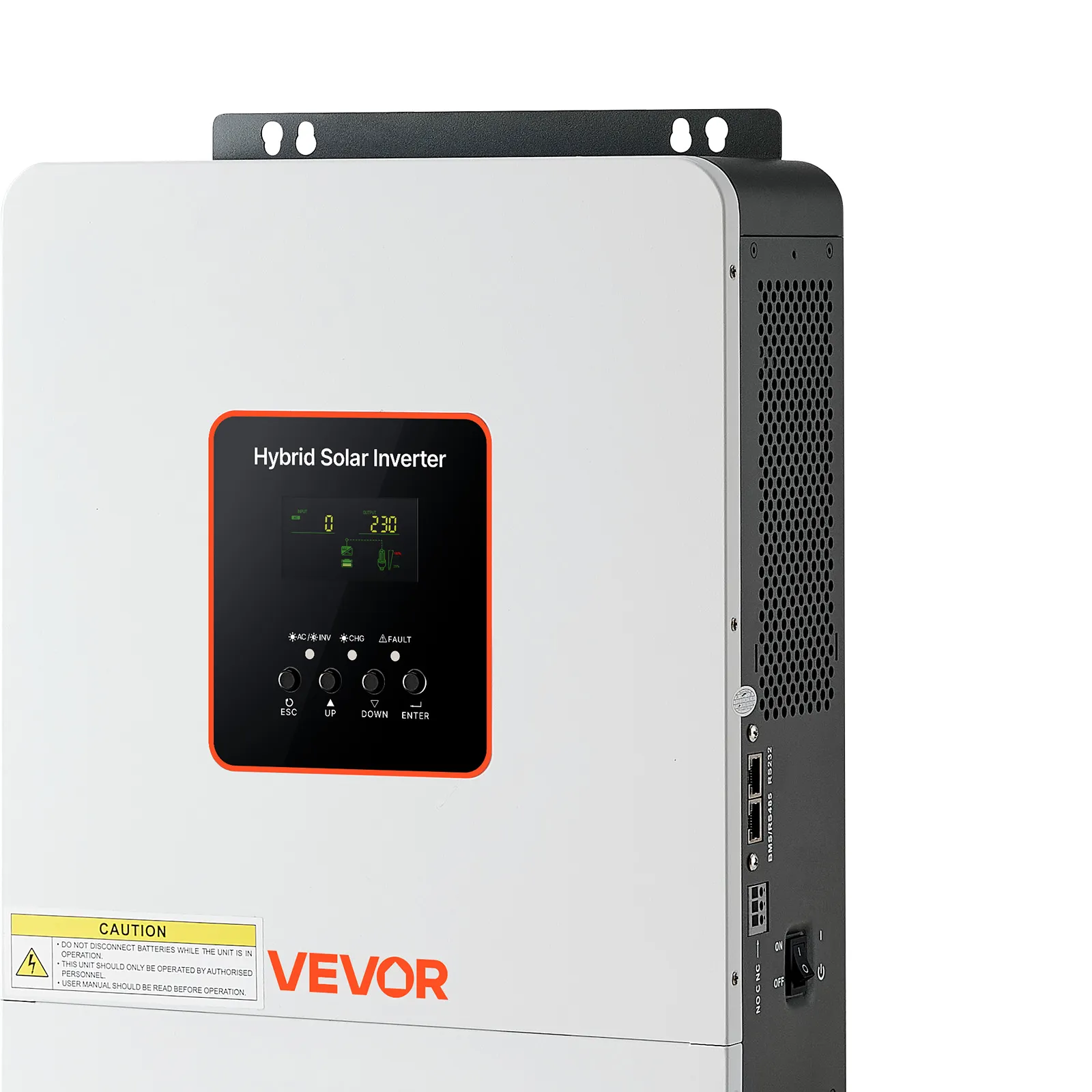
Fuse Included
The off grid hybrid inverter charger comes with a fuse for extra circuit security. If the fuse blows during a protection event, you can easily replace it without the need to purchase additional components.
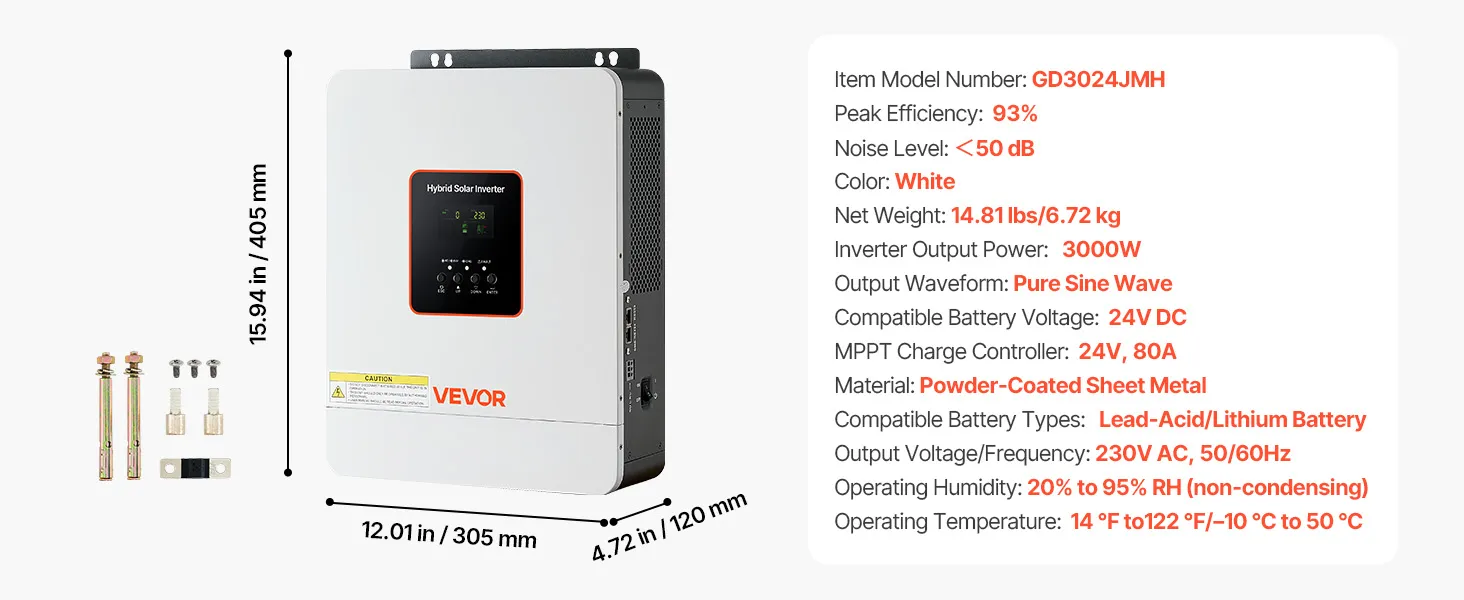
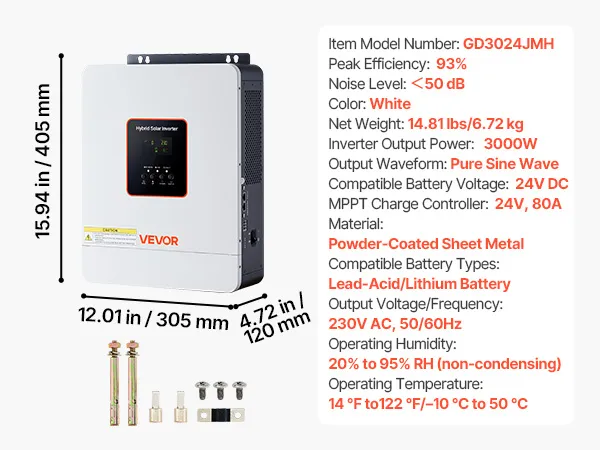
VEVOR 24 Volt Hybrid Solar Inverter with 3000W Pure Sine Wave AC Output
The VEVOR 24 Volt hybrid solar inverter converts 24V DC battery power into 3000W of 230V AC single-phase pure sine wave electricity. It delivers stable output quality, powering small homes, cabins, and off-grid solar systems. The 3000W continuous output rating means you can run several household appliances simultaneously with minimal voltage drop or waveform distortion.
Pure sine-wave output is an ideal way to power electronics that are sensitive to voltage, such as computers, TVs, medical equipment, and motors that can change speed. This inverter's waveform is very close to the waveform of grid-supplied electricity, unlike modified sine wave inverters. This means that connected devices will operate within their designed electrical parameters and are less likely to suffer from performance degradation, overheating, or premature component wear due to waveform incompatibility.
Built-In 80A MPPT Solar Charge Controller with 99% Conversion Efficiency
The built-in 80A MPPT solar charge controller constantly looks for and locks onto the maximum power point of the connected solar array. It lets the panels capture the most energy possible under varying lighting conditions throughout the day. This 99% conversion efficiency rating means that the majority of the solar energy collected is directed to the battery bank rather than being lost as heat or through electrical resistance in the charge circuit.
For people who use solar power to power their homes and are fully off the grid, this level of efficiency builds up over daily and seasonal use cycles, resulting in larger usable energy reserves and fewer instances when the battery runs out of power in low-light conditions. This 24 Volt hybrid solar inverter features an all-in-one design that eliminates power losses and wiring issues associated with connecting an external MPPT controller. This helps the whole system work more efficiently.
2-in-1 Inverter and MPPT Controller Integration for Simplified System Design
This hybrid unit combines the functions of an inverter and an MPPT solar controller into one housing. It means you don't have to buy separate parts, run extra wiring, or worry about compatibility issues when building a multi-device off-grid power system. This combined architecture reduces installation time, reduces the risk of electrical failures, and can lower the overall cost of a full solar power system.
The integrated design is especially useful for building camper vans, tiny homes, and remote cabins where there isn't much room for panels, wiring can be complicated, and components may be heavy. Users benefit from a single interface for monitoring and controlling both solar charging and power inversion. This feature simplifies system monitoring and reduces the technical knowledge required to assemble separate inverter and controller components.
Wide Battery Compatibility Supporting Lithium, Lead-Acid, and Custom Types
This hybrid solar inverter is made to work with 24V battery systems and supports lithium-ion, lead-acid, and custom battery configurations. It means that users can pair the inverter with the energy storage technology they already have or want to use. This multi-chemistry compatibility means you don't have to spend a lot of money replacing working battery banks to make sure they work with a new inverter.
Lithium battery users benefit from the inverter's ability to handle the higher charge voltages and flat discharge curves that lithium chemistries need. Lead-acid users still receive full support for the absorption and float charge stages their batteries require. Adding the ability to set up custom battery types further improves compatibility. It lets advanced users fine-tune charge settings for specialized storage solutions beyond factory defaults.
Six-Layer Protection System Covering Voltage, Current, and Thermal Faults
This 24 Volt hybrid solar inverter features multiple safety features, including protection against short circuits, overloads, overvoltage, undervoltage, and overtemperature. Each layer serves as its own protection, so the system can detect multiple problems at once without one protection function interfering with another during a complex electrical event.
Over-temperature protection prevents motors and circuits from breaking down when running for long periods in hot, high-load environments, and over-voltage and under-voltage monitoring ensure that battery and load circuits generally stay within safe operating windows. Short-circuit and overload protection kick in within milliseconds when there are sudden current spikes. It keeps the inverter's internal parts and all connected appliances safe from damage caused by wiring problems or unexpected load surges.
24V DC to 230V AC Conversion Optimized for Home and Camper Applications
This inverter converts 24V DC to 230V AC, which aligns with the standard voltages used by home appliances, lighting systems, and consumer electronics worldwide. This direct compatibility means that most common household and camper loads that run on the 230V standard don't need any extra voltage transformation equipment.
The 24V input voltage is a good fit for mid-size battery banks made from common 24V lithium or lead-acid configurations, which is useful for camper van and mobile off-grid users. The 230V AC output lets users use regular appliances without changing them or using adapters. It makes the inverter a ready-to-use solution for both permanent off-grid home systems and mobile living setups that need reliable power matching to the grid.
24 Volt Hybrid Solar Inverter Overload and Short Circuit Response Protecting Sensitive Electronics at Load
The overload protection circuit monitors the total wattage used by all connected appliances. If it exceeds the inverter's 3000W rated threshold, it automatically starts protecting itself. This active monitoring prevents overload conditions that would otherwise cause excessive heat, damage internal components, and shorten the unit's useful life when used heavily every day.
Short circuit protection is another important layer of protection. It detects sudden current surges caused by wiring problems, appliance failures, or accidental contact with a conductor. It then disconnects the output circuit in milliseconds, preventing damage from spreading to other devices. These two protection features work together to ensure that the 24 Volt hybrid solar inverter protects not only its own internal circuitry but also all sensitive electronics and appliances that draw power from the system simultaneously.
Product guides and documents
User manual-de (PDF) Review
Questions and Answers (1)
Kann dieser wechselrichter auch horizontal montiert werden?
Kann flach liegend verwendet werden
Sollte diese Antwort Ihr Problem nicht lösen, wenden Sie sich bitte erneut an uns, um Hilfe zu erhalten.
By vevor
Helpful
(
0
)
LWNKYTJGP230O3Q3F001V7
VEVOR 3000W Hybrid Solar Inverter, 24V DC to 230V AC, Pure Sine Wave Power Inverter Charger, Built-in 80A MPPT Solar Controller, Compatible with Lead Acid Lithium Battery, for Home, Camper, Off-Grid
4.8 4 Reviews
259 90 €
Earn at least 2% points on purchases or save up to 15%.
<span style="color: transparent;">FREE to join</span>
Each when you buy 0+.
Shop
Get -% off for new user
Exclusive 5,00€ off for your first three orders on the App.
Download Now


In Stock
Security & Privacy
100% Secure payment
Secure privacy
FREE Returns
30-day Free Returns
Refund for lost packages / damaged items
Professional Service
12-months warranty
Customer Support
Compare with similar items
Similar Items You Might Like
People Who Bought This Item Also Bought
Best sellers in this category
People Who Viewed This Item Also Viewed
Your Browsing History